Friday, November 12, 2010


The Somme is just beautiful.

We moored up for the evening near a cemetery. The French go to town with their gravestones. This one made us look twice. The second name on the left is awaiting events.

Half way to Abbeville and we spot a sign for a cafe on the bank. It's lunchtime so why not? The enterprising owner had turned a corner of her kitchen into a bar. Typically French.

Sadly it's time to leave this lovely place so we turn around to head all the way back again. This swing bridge looked like hard work as we follow the trip boat back to Abbeville.
The French often find reading signs difficult as here in StValery.


The original medieval fishing village has spread with the arrival of tourism.


St.Valery and end of the Somme for us. There can't be many canals that end on the coast. The steam train goes around the bay which is a favourite with artists.
The tide timings are a bit difficult so we stay the canal side of the maritime lock but would have loved to have taken Snail through and into the harbour!

Dead straight, the canal takes us to the sea so it's worth the slog. The only other boat on the move is this very splendid trip boat.


Abbeville is at the end of the river Somme at the junction with the canal that ends at the sea. It wasn't spared in the two wars but has made a cheerful effort at rebuilding with this colourful train station and water features.


This village used to be self sufficient for power with its own hydro-electric station. How things have changed. I did eventually manage to get a light bulb to come on.


The next village of Long is also built to serve a chateau and provides a splendid mooring surrounded by gorgeous buildings and the longest greenhouse we've ever seen. Hence the name praps?


Next stop Picquigny, an ancient village built around an 11th century chateau the ruins of which are a short climb away to the top of the hill here. While we were away we had been joined by a group of eccentric, very friendly boaters whose varied craft are all powered solely by solar panels. They are on their way to Amiens so we warn them to be watchful of their boats there and wave goodbye.

We were pleased to leave Amiens after that.
On the edges of the city are the Hortillonages - waterside allotments each with their own little bridge over the many small tributaries here. The produce from them is transported along the Somme by small wooden boats every Saturday to be sold at a market in the city.


The mooring at Amiens was on a high wall which made our roof level with the road but the view from the waterside made up for it.
This was to be the last photo of Skipper's much admired dragon. It was stolen that night.


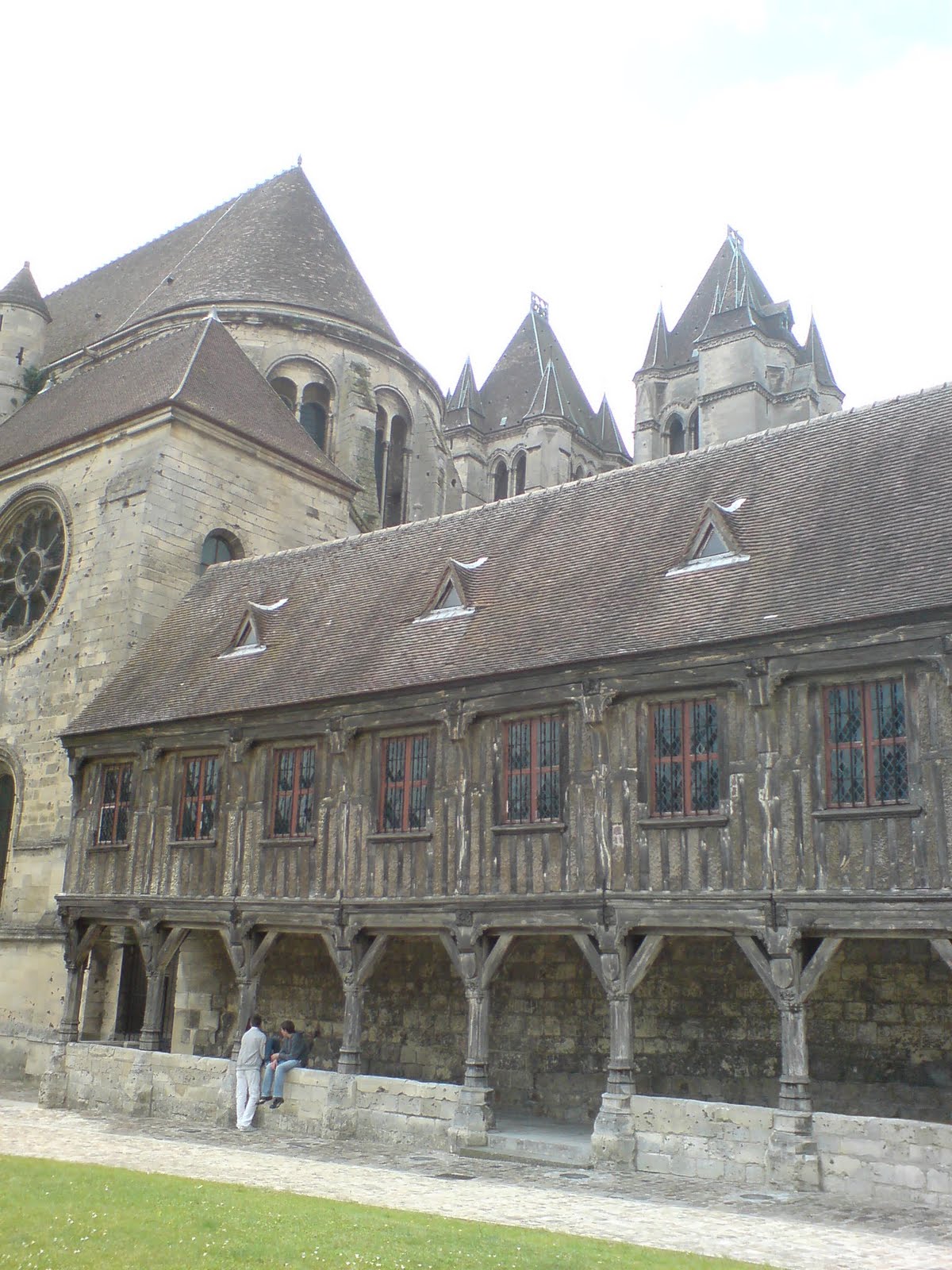
Our next stop on the Somme is at the ancient and beautiful city of Amiens with it's famous cathedral and medieval library built of wood. Strange choice of building material for a collection of books?


We take a night-time walk in the riverside town of Corbie with its Disney inspired townhall. Wot's this? Our terrier is disturbed to read that France is not so welcoming to his kind these days.

A sign on an arm of the Somme directs us to the Port of Bray. Sounds good so off we go. Er, this is it.


We turn off onto the canalised River Somme and into peaceful boating. A team of cheerful lockies follow along the towpath and once again we can use pins for mooring on this little used waterway.
At Froissy we stop and take the little steam train that follows the canal, through a tunnel and across roads and fields. Newly restored by volunteers it was first built by the Brits in WW1 to take troops and supplies to the trenches.

Thursday, November 11, 2010


Peronne and the only free mooring (we're on a budget) is by the industrial estate. It's none too comfortable so we'll visit the town another time.

The St Quentin canal has a 5,670m. tunnel at Riqueval. An electric tug pulls boats through as there is a danger of asphyxiation if many boats and barges go through at once under their own steam all with their engines on. Not much chance of that this time - we and a little cruiser are the only boats to make the 2 hour trip.

We move on and find a quiet, rural mooring near Vaucelles lock. It's a bank holiday and the lockkeepers are having the day off too so we pack a picnic and head for the woods.
We've never seen so many wild flowers. We sit down among bluebells, helebores, cowslips and wood anemones and have a perfumed picnic.


Cambrai is celebrating 200 years since this canal was opened by Napoleon with a re-enactment. Strangely they don't want the boats to participate in any way - very French apparently - so this time we just watch.


On to Cambrai and the St.Quentin canal. Here we find another narrowboat that stays here year round and also Tam & Di, famous in boating circles for their barge handling courses. We hope we don't make any mistakes mooring up under their gaze and walk into what is another lovely northern French town.
We leave Arras and find a quiet spot to do some smartening up painting. Out comes Origami from her box on the roof to reach those hard to get at bits and in jumps Woody. Its his favourite boat.

There was a more personal reason for wanting to visit Arras with our boat. My grandfather had been one of the 36,000 killed here in WW1 and whose remains could not be retrieved. We found his name on the memorial inside.


Arras looks like a film set from its belfry. It was flattened in WW1 and rebuilt to look as it did before the devastation complete with Flemish gable frontages and gothic townhall.


Moorings in Arras are unreachable as the canal is silted up so we stop at St.Laurent and will have to bus in to the city. We are invited alongside another narrowboat, the first we've seen in France. Our terrior embarks upon the first of several holiday romances with their beautiful lurcher and we enjoy the entertainment provided by the slalem course just the other side of the mooring.
This may seem like a very ordinary photo but now we have reached the rural Canal d'Arras with no commercial traffic surging by, we could use mooring pins for the first time in two years with no fear of them being pulled out!


Douai is full of architectural interest. We enjoyed the way the door of this shop was part of the design and wished we'd had the money to put in an offer. The registry office would certainly add class to your wedding pics.


Northern France has belfries too and as ever we have to climb this one in Douai.

Up the Scarpe to Douai where we moor alongside some live-aboards on their barges in a disused arm of the river. There used to be much commercial shipping here and the bargees created this dog cemetery which is still used. Woody was unusually quiet.


Aire-sur-Lys is a lovely town and we are pleased we stopped to explore. Nearly didn't as the moorings are in a desolate, run-down arm of the river.
The boating season hasn't started yet and getting water is tricky. We find the tap in this crowded yachthaven is still turned on but reaching it without hitting someone's pride and joy on this windy day took all Skipper's skill. Then there was getting out again......
It's mid-March and at last the ice melts enough to head for France. The town of Menen is on the border. One half of the main street is in France, the other in Belgium.

Sunday, March 14, 2010

Tomorrow we leave Lokeren for Gent and then on the river Leie into France. Please bear with me, followers all, because I may have to blog retrospectively as usual because of probable lack of internet on our travels.

Wednesday, March 3, 2010

Just
Just had to include this photo of our terrier in the aftermath of his snowplough impression. He's certainly had plenty of opportunity this winter.
Just as we are planning to leave in a couple of weeks, the forecast is for yet more snow.
As long as the ice stays away from the river, Snail will be away again.