Thursday, January 23, 2014


Back through Groningen city again with its fascinating mix of old and new.


Sadly not opening in a store near us soon - yes, I'm desperate. The choice is not too good around here.


      As well as farming, there's also serious ship-building happening here in north Holland.


Thankfully we made it and headed inland again. There are many large farms around here, many with extensive reed thatching on their enormous roofs.


Introductions and arrangements made, off we go again past Zoutkamp and on towards the sea. We're heading for the nature reserve of Lauwersmeer and stop on one of its islands in hot, glorious sunshine. The next day we get a taste of how quickly the weather can change here. It was very cold and the fog that had descended made it extremely difficult to find the marker buoys that we needed to find our way onto the canals again rather than out to sea.


We were very close in boating terms to the fishing village of Zoutkamp which was in turn very close to the marina where Snail was now booked in for the winter. Decision made to head that way and introduce ourselves, being so close, then carry on cruising until the end of the month.


Another popular pastime here is 'wadlopen', mud walking, where you get togged up to wade out towards the sea in the very far distance following a guide who hopefully knows where the mud will come no further up than your knees. There's a group heading out in the middle of the picture. It's a cold and windy day and we too have come prepared but don't feel inclined to join them. Woody is relieved, he has very short legs.


Opposite our mooring is a Seal Hospital. We leave a sulking Woody behind but see when we get there that dogs are catered for too at the entrance with cage and water provided. There are always plenty of inmates being nursed back to health here. Their problems are caused by pollution, viruses, fishing boats (the trawler net mountain is made from just a few of the tons of discarded nets that the seals can be trapped in) and nature when there are raging storms at sea which separate mother and pup.


It's a credit to Skipper's skills that we only get stuck in the mud on the tight bends once and with relief we find a wide enough place to turn around when we reach our destination at Pieterburen. We moor next to a prairie sized field covered in discarded onions from the recently harvested crop and claim gleaning rights that evening. What we have actually come to see is just over the wooden bridge behind us on the right bank.


We nearly miss the turn off under the bridge,the junction is so tiny compared with what we are now accustomed to over here. We are trying to get to Pieterburen near the coast but have been warned that the waterway is 'undiep' (shallow) and with several acute right angled bends. Snail may be too long to negotiate them and there's nowhere to reverse out again if that happens. But it's a lovely October day so let's give it a try and hope we don't meet anything.


This is the approach to Winsum, an interesting town and the canal takes us through it but we don't stop. We are on the way to somewhere a little more challenging to reach.

Wednesday, January 22, 2014


Ever onwards and more reminders of how things used to be at Onderdendam.


There's another moated manor house in Uithuizen but sadly closed at this time of year. If the lions guarding the entrance were anything to go by, it would have been worth a visit!


And on to the head of navigation at Uithuizen. The white boat in front is taking us to his yachthaven where he is sure we will be able to turn around. He has already rescued us from an un-planned overnight stop at a non-functioning self service lock by calling his friend the lockkeeper out to get it going again. It's a Sunday and without his intervention we would have had to wait til Monday.


Through Bedum with its only claim to fame, its leaning tower. Apparently it leans more than Pisa but because it is shorter, it doesn't fall over.


                 Past rows of houseboats on the outskirts.


We pass briefly through the university city of  Groningen and some modern waterside architecture. We will return for a longer stay later.


Out of the windmill window we could see another one close by, a timber mill this time. Also restored by the same team and still in use, our new friend opened up this one for us to see too. Skipper was interested in the old tools and this display of klompen making.


And here he is. Note the klompen (clogs), common footwear around here.


                             Just glorious!


For a change, an inside shot of a windmill. We'd moored near this one and the 75 yr.old caretaker came over to chat about our boat. He then insisted on unlocking the windmill to give us a personal tour. He was very proud of the work that had been done by volunteers, including himself to reconstruct it all after years of neglect and rightly so.


I struggled with this one until a passerby pointed out I'd left the lock on the other end.


H&S would love this floating scaffolding but it's the only way to do any work on these old, canalside houses with their feet in the water.


    Inland again at Appingedam, another very old town with a bisecting canal to enjoy.


     And this the beautiful 18th century lock, no longer used.


These are the lock gates at Termunterzijl that separate the sea from the land. We were amazed how low the drop to land level was. Climate change may not be good news for the Netherlands.


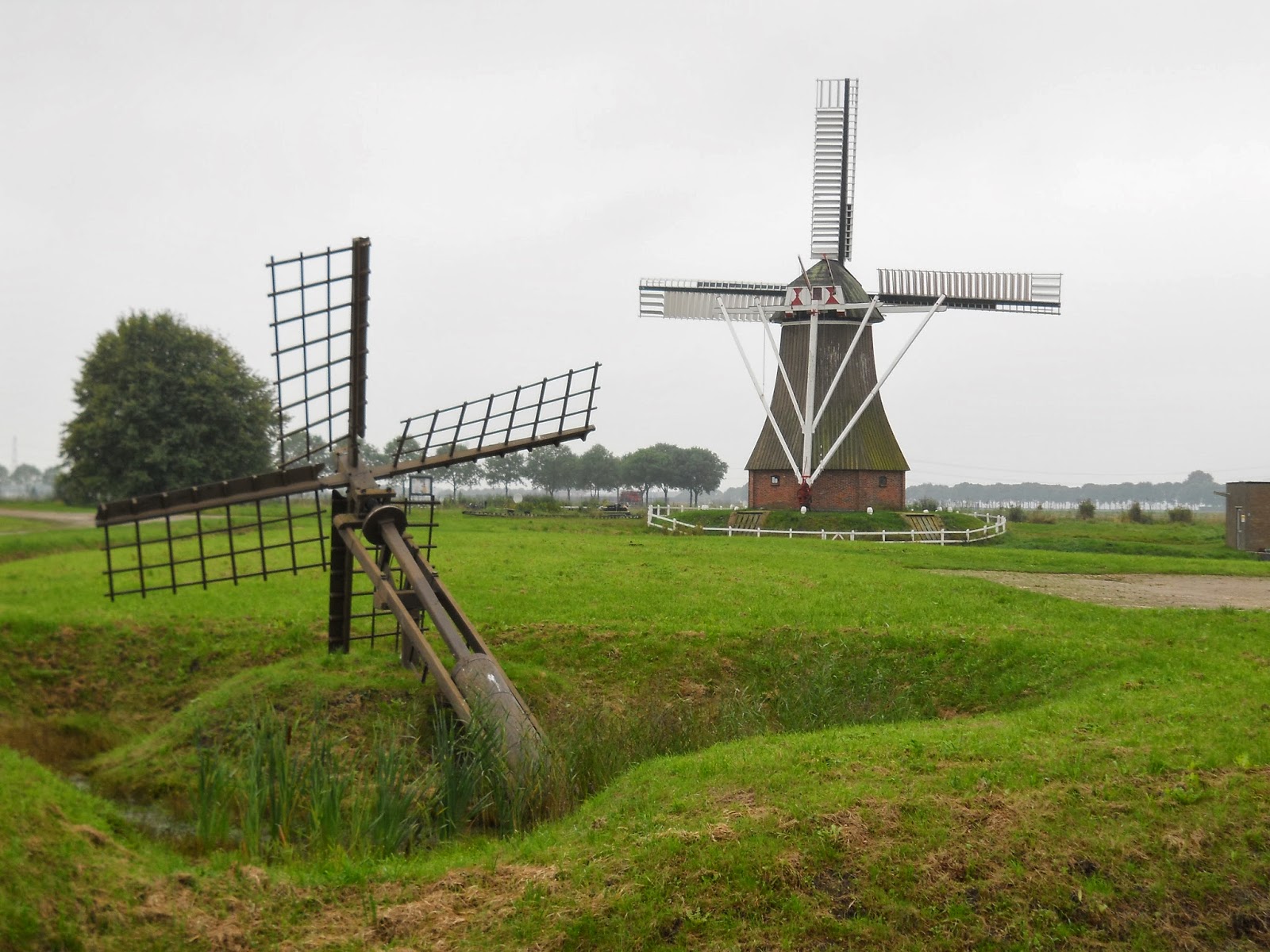
Haven't posted one for a while so here's two both used to pump water. We're on the way to Termunterzijl and the Eems-Dollard Sea.


Walked to the yachthaven at Schmeeda where we found this delightful seat made of mosaic tiles and showing the peat workings that this area is famous for.


Here's another typically Dutch scene. The house is well kept with symetrical arrangements of the ornaments in the windows. The garden is manicured to within an inch of its life, the cruiser protected against the elements. The little traditional tug is a popular boat to own and fetches a large price. We've often seen them in the summer with a crew of children unsupervised, learning the ropes at an early age.


Not for the squeamish. This controller of vermin was checking his traps by the boat and came over to chat. He is paid to catch these 'musk rats', an introduced species that cause great problems because of the size of their tunnels that they bore through waterway banks. The reclaimed Netherlands depends on its watercourses but apart from the flooding risk caused by collapsing dykes, farmers have been drowned when the ground gives way under their tractors.


Thankfully the Dutch have always valued their historic boats and so they are a fairly common sight. This one immaculately maintained at the end of the Oude Pekele canal.


               As you can see.


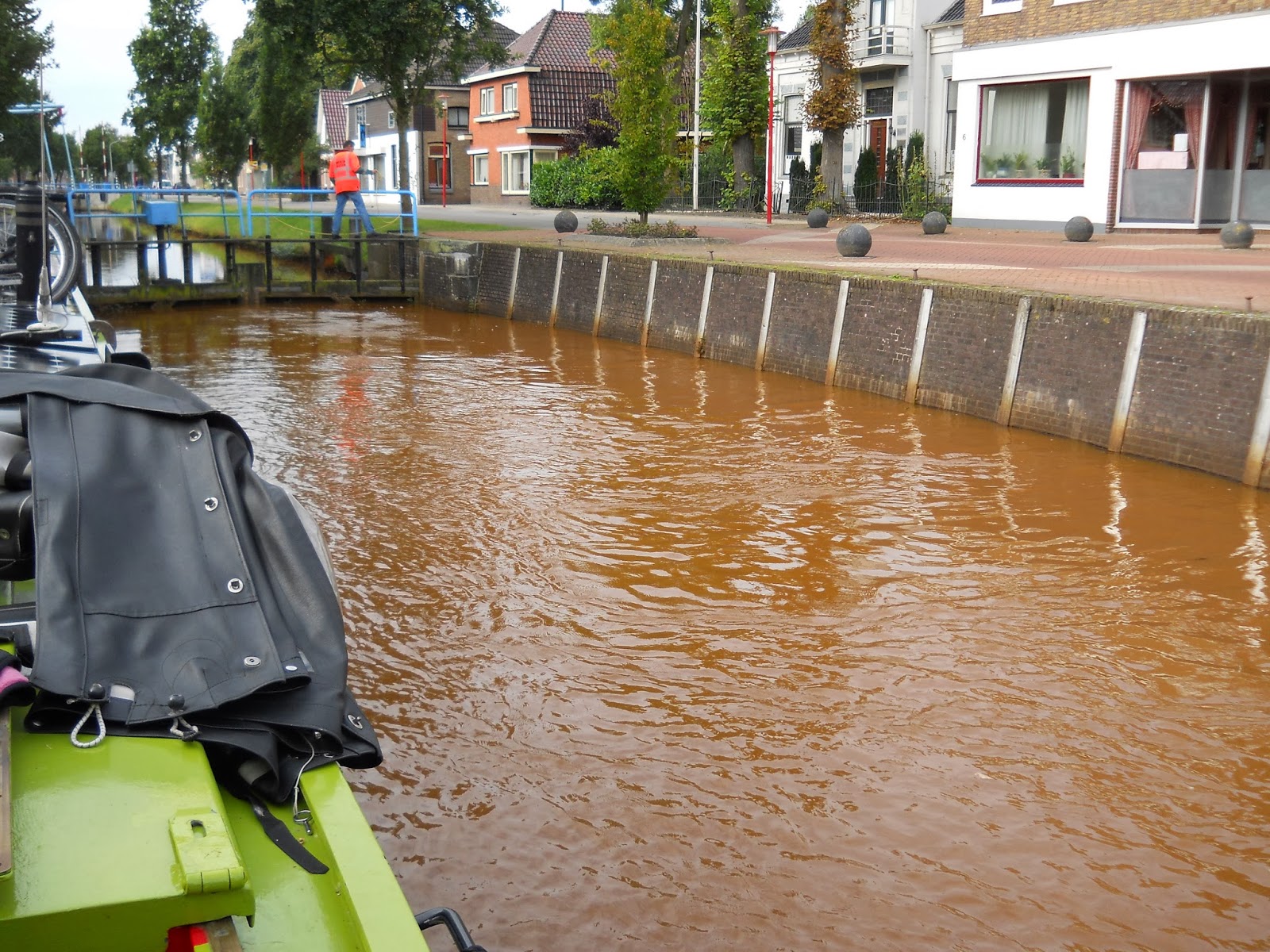
Dotted along the towpath were reminders of how it used to be done. This was once a busy commercial route with barges carrying peat. The water in this canal was indeed very brown.


Also typical for the area and probably for most of the Netherlands, are small canals that run through the centre of towns. Here our key didn't work as waterways staff do the many bridges for you. This is at Oude Pekele where the very friendly but quite manic scooter riding keeper and his long suffering sidekick often held up the traffic while taking numerous photos of us.


The area is noted for its moated manor houses. Some like this one are open to the public.